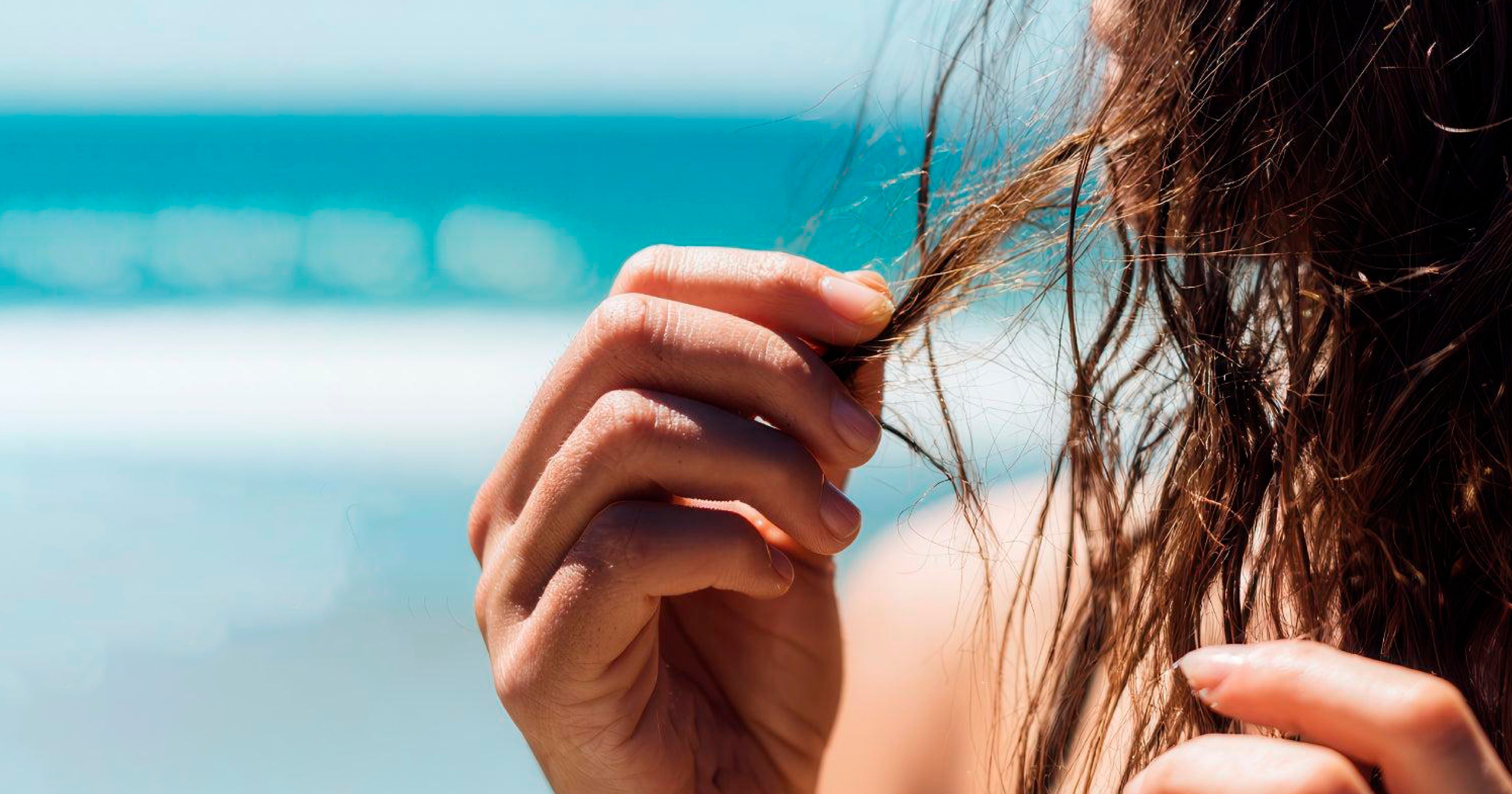
L’Summer puts hair to the test. Sun, UV rays, salt, chlorine, wind, more frequent washing and high temperatures can leave lengths drier, dull, frizzy and difficult to manage.
That’s why, between late August and September, it’s the ideal time for a true post-summer hair reset: a targeted routine to help restore softness, shine and a healthier look to the hair fiber.
But where should you start? The first thing to understand is that dry hair and damaged hair are not necessarily the same thing. Choosing the right products starts with recognizing what your hair really needs.
Why does hair get more damaged in summer?
During the summer months, hair is exposed to several stress factors at the same time.
Sun can make the hair fiber drier and less shiny, especially on colored or treated hair. Salt tends to leave lengths rougher and dehydrated, while chlorine can heighten the feeling of dryness and alter the appearance of the color.
These often add to the effects:
- more frequent washing;
- repeated blow-drying;
- use of hair dryers, straighteners and other hot tools;
- wind;
- hair ties and frequent updos;
- less consistency with your regular haircare routine.
The result? By the end of summer, your hair may look less soft, frizzier, dull or brittle.
5 signs your hair needs a post-summer reset
Before changing your entire routine, observe how your lengths behave.
1. Your hair feels rougher
If your hair feels less soft than usual when you run your fingers along the lengths, it may be time to increase hydration and nourishment.
2. Your ends tangle easily
Hair that tangles immediately after washing or throughout the day may indicate a drier hair fiber that is harder to manage.
3. Your hair has lost its shine
Does your hair color look less vibrant and your hair appear dull, even right after styling? Sun, seawater and chlorine can contribute to reducing the shine of your lengths.
4. Frizz has increased
Drier hair fibers tend to react more to humidity, making hair look puffy and less manageable.
5. Your hair breaks more easily
If you find more broken hairs on your brush or notice particularly fragile ends, it’s worth adding products focused more on repair to your routine.
Dry or damaged hair? The difference matters
One of the most common mistakes when choosing products is treating all “damaged” hair the same way.
Dry hair mainly needs nourishment, softness, and greater manageability.
Damaged or sensitized hair can show signs of fragility, loss of elasticity, breakage, and a more compromised structure. In this case, it’s worth choosing treatments specifically formulated to support the hair fiber.
Both conditions can also be present at the same time.
For this reason, after summer, it may help to build your routine around your main concern.
Step 1: Choose a suitable cleanser
After weeks of swimming in the sea and pool, you may feel that you need to “deep clean” your hair. In reality, using overly harsh shampoos all the time can make hair feel even drier.
It’s best to choose a cleanser suited to your hair type and scalp condition.
If your lengths are very dry or sensitized, it may help to choose gentle shampoos or formulas from repairing lines.
One example is Wella Professionals Ultimate Repair, a line designed for a routine dedicated to damaged and stressed hair.
Wella Professionals FusionWella Professionals Fusion is also particularly suitable when the focus is on fiber fragility and the need for a more structured routine.
Step 2: Add a mask or intensive treatment
After summer, conditioner alone may not be enough.
Once or twice a week, depending on your hair’s needs, it may help to add a richer mask or a repairing treatment.
For dry hair
If the main problem is a lack of softness, choose nourishing formulas that help make the lengths more manageable and pleasant to the touch.
For fragile or sensitized hair
In this case, a treatment focused on repair may be more suitable.
One product to consider is Sebastian Professional No.Breaker, designed for stressed and sensitized hair.
It can be added to a post-summer routine when the lengths are particularly fragile after exposure to the sun, sea, chlorine, or frequent styling.
Step 3: don’t confuse nourishment with repair
Nourishing and repairing don’t mean exactly the same thing.
If your hair is mostly dry, frizzy, and difficult to manage, a nourishing leave-in cream can help improve softness and control.
One example is System Professional LuxeOil Keratin Protect Cream, a leave-in cream designed to complement styling and leave hair softer and more manageable.
If your hair is very fragile and sensitized, it may be more helpful to add a treatment specifically designed to repair it.
In other words:
dry, frizzy hair → more nourishment and manageability
fragile, sensitized hair → focus on repair
Step 4: always protect your hair from heat
After summer, it’s easy to focus on treatments and forget one of the most important steps: protecting your hair while styling.
Hair dryers, straighteners, and curling irons operate at high temperatures and, when used frequently, can increase stress on the hair fiber.
For this reason, it’s important to use a heat protectant before styling, even when using only a hair dryer.
Slightly lowering the temperature, avoiding running the straightener over the same section several times, and working on properly prepared hair can make a big difference over time.
Step 5: restore shine to the lengths
After sun and sea, one of the most noticeable problems is often a loss of shine.
An oil or finishing product can be used on the lengths, especially the ends, to make the final result softer and shinier.
Among the iconic products for this type of use is Sebastian Professional Dark Oil, ideal if you want a soft, shiny finish without weighing your hair down too much.
Moroccanoil Treatment can also be added to your routine on damp hair or, in small amounts, on dry ends.
The main rule is simple: always start with very little product and add more only if needed.
A post-summer routine based on your hair concern
If your hair is very dry
You can structure your routine like this:
- gentle shampoo;
- nourishing mask;
- leave-in cream;
- heat protectant;
- a few drops of oil on the ends.
If you have damaged and fragile hair
Focus more on:
- specialized shampoo;
- repair mask;
- repair-focused leave-in treatment;
- heat protection;
- style at more moderate temperatures.
If you have frizzy hair
Focus on:
- gentle cleansing;
- hydrating or nourishing mask;
- smoothing product;
- proper drying technique;
- lightweight finish on the lengths.
If you have color-treated hair
After summer, it’s particularly important to:
- use products specifically for color-treated hair;
- avoid excessively hot water;
- protect from heat;
- limit overly aggressive styling;
- nourish the lengths regularly.
Should I cut my hair after summer?
Not necessarily.
Trimming the ends doesn’t make hair grow faster, because growth happens at the root.
A trim can be helpful, though, if the ends are very damaged, broken, or split.
Removing the most damaged parts can make your hair look neater, fuller, and healthier.
How long does it take for hair to recover after summer?
It depends on the condition of the hair fiber and the habits adopted over the preceding months.
In some cases, after just a few uses of a more nourishing routine, hair can look softer and more manageable.
When hair fibers are particularly sensitized or there is noticeable breakage, it’s important to be consistent and reduce sources of stress at the same time, such as very high temperatures and frequent styling.
There’s no single “miracle” treatment: results mainly depend on the combination of the right products, consistency and daily habits.
Mask or conditioner: which should you choose after summer?
They’re not necessarily alternatives.
The conditioner is generally intended for more frequent use and mainly helps detangle and make lengths more manageable.
The mask is a more intensive treatment, added periodically as needed.
After an intense summer, it can be helpful to keep conditioner in your regular routine and add a mask once or twice a week.
Are oil and reparative treatment the same thing?
No.
An oil can help mainly with softness, shine, frizz control and finishing.
A reparative treatment, on the other hand, is formulated for a different purpose: to support stressed or sensitized hair fibers.
That’s why one product doesn’t necessarily replace the other.
Both can be used at different times as part of a complete routine.
September hair reset: fewer products, chosen more carefully
Returning from vacation doesn’t have to mean creating a routine with ten different products.
It’s best to focus on just a few genuinely useful steps:
- suitable cleansing;
- targeted treatment;
- leave-in;
- heat protection;
- finish on the ends, if needed.
The most important thing is to choose each product based on the actual condition of your hair, not just the promise on the packaging.
After weeks of sun, sea, wind and chlorine, September is the ideal time to assess your lengths, understand what they need and build a more targeted routine.
Discover professional treatments at Look4Hair to care for your hair after summer and create the routine that best suits your needs.